
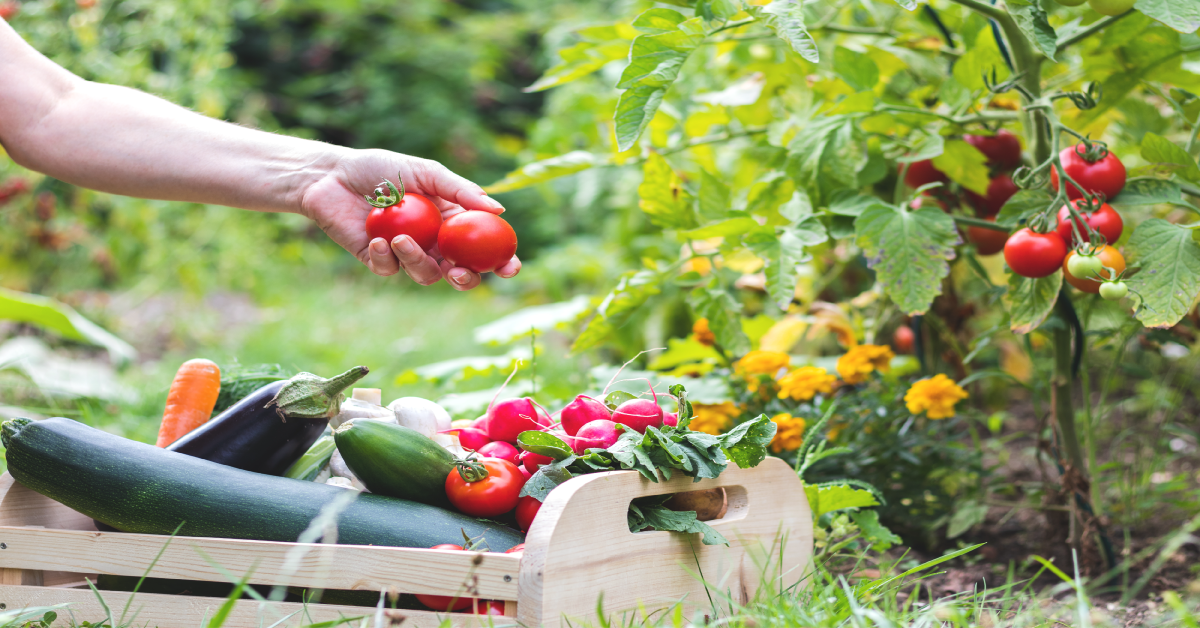
For many people, owning a vegetable garden is synonymous with effort and back pain, watering constraints, digging or weeding chores, tedious fight against pests and diseases, etc. However, by following a few tips, you can cultivate a vegetable garden with minimal maintenance, and still enjoy fresh vegetables and herbs at your convenience.
As long as you apply some commonsense practices, you can indeed harvest fruits and vegetables with minimal watering and without spending a lot of time maintaining your garden.
Here are our top 4 quick tips to get you started.
Permanent mulching: Mulch to limit watering and weeding
First of all, mulching your crops and plantations allows you to use the green waste from the garden such as mowing lawns, tree leaves, small, crushed branches from pruning trees. This will save you from going back and forth to the recycling center; this waste you will feed your crops, and further stimulate microorganisms in the soil (worms, bacteria, etc.).
Avoid bare ground because it will quickly become covered with weeds that you will have to uproot. Also, that could cause soil compaction, erosion, and formation of crust.
When the soil is covered with mulch, it dries out slower, and water evaporation is minimal, especially in summer, which will save you water and reduce the frequency of your watering. In addition, during winter, mulched vegetables and shrubs are more resistant to frost.
Give Preference to Ground Covers
Ground cover plants will be ideal, especially once in place, they hardly require any maintenance apart from a possible watering in times of drought. In addition, they reduce weed growth, while having an assumed aesthetic role by highlighting taller plants or by visually linking the different plants in your overall garden with colors, for example.
Choose Vegetables Wisely
Several types of vegetables don’t need so much of your intervention to grow. These are the tough vegetables, such as beans, squash, potatoes, onions, rhizomes, and other tubers.
As you plan for your leafy vegetables, consider incorporating the following low maintenance herbs/vegetables as well.
The garlic, shallot, and onion: These three eminent members of the Alliaceae, garlic, shallots, and onions family are essential condiments. They are appreciated for their flavor, nutritional and medicinal benefits. And in the vegetable garden, they belong to those bulb vegetables which turn out to be extremely easy to grow
Beetroot: The beet needs soil rich in organic matter and a sunny location, and that’s about it. If you mulch properly, you will need very minimal watering. It is harvested about 4 to 5 months after sowing, which will be done in a staggered manner.
Artichoke: this veg is enjoying renewed interest. Artichoke has its place in the vegetable garden where it does not require any maintenance or watering. You just have to isolate it a little because it can be invasive and reach 2 to 3 meters in height, thus shading other vegetables.
Asparagus: it takes a good dose of patience to eat your first asparagus, but once planted, they stay for up to 10 years. Asparagus has no strict climate or soil requirements, and its cuttings are planted in spring.
Leek: No bigger than a pencil, the perpetual leek lives up to its name. It’s a perennial plant, and you can harvest for years. It is grown in rich soil, mostly in the sun, and is harvested from September to June. As for the bulbs, you will plant them between mid-August and mid-September. The leaves add flavor to soups, sauces, and salads.
Parsnip: This fall vegetable is rich in vitamin B9, fiber, and minerals. Growing it is, therefore, a clever idea for its health, especially since it is not very demanding. All you need is soil rich in compost, a good mulch, and the harvest will be beautiful. Sow from February to June and harvest from September and throughout the winter since parsnips are quite hardy.
Lastly, Create a Small Vegetable Garden
It is much easier to maintain a small vegetable garden than a large one. So, think about creating a garden with a small cultivable area.
When creating your vegetable garden, make sure it is near your home. This saves you time, as you don’t have to walk through the entire farm/compound to get there.
Also plan a water point near your vegetable garden.
Happy Gardening!