

“Booooozaaa, boooozaaa, your boza seller came!” If you are in a neighborhood of Istanbul in the darkness of a winter evening, you might hear the voices of a man who called out with these words to sell his boza. Yes, even in these times of online shopping retail culture is still alive, and this cry means that winter has officially came for many Istanbulites. On the other hand, it is like a time machine for many foreigners.
Street selling of boza is one of the oldest urban rituals that is still going on in Istanbul. But Istanbul is not the only city where you can drink boza; there are also other cultural cuisines including this interesting drink such as Bulgarian.
Made from different kinds of cereal flour Boza is a fermented drink. It is slightly sour but mainly sweet. Let’s first talk about the geographical history of this original drink.
Geographical History
There are some written documents that mention how to keep and to get colder fermented flour drinks in the 4th century BCE (Before Common Era). According to some agricultural scientists, fermented flour drinks have been produced in Mesopotamia and Anatolia since the 9th century BCE. It is not surprising. Because, the first farmers in Mesopotamia where agriculture was started, discovered natural fermentation by lactic acid bacteria.
Between the 4th and 9th BCE they used bacteria as a starter for the fermentation process which succeeded in producing amazing fermented food and beverages that we still love to eat and or drink today. Cheese and beer are at the first that come to mind!
So, boza is probably one of those.
After that time period Boza arrived in the Caucasus and Central Asia via seaway. Turkish communities that lived in Central Asia loved this drink and gave it the name “booze”. The event that most helped boza to spread through different geographies such as Anatolia, South Russia, East European countries is when Turkish communities migrated from Central Asia. During that time Turkish travelers introduced boza to people who lived in different geographies where they migrated.
In the Ottoman period, boza lived its golden age in Anatolia and the Balkans. An Ottoman explorer once said that there were over 300 boza shops in Istanbul in the 17th century. Today, you have almost no chance to encounter a boza shop coincidently. However, street boza sellers are still alive. In Balkan countries, one of them, Bulgaria, there are many places where you can drink traditional boza.

Boza sellers in Sofia, beginning of 20. century.
Ingredients
The raw material of boza can be variety of cereals like wheat, rice, oat, barley, corn. But the best quality version of boza is made from millet.
Fermentation Process
It begins with Ground millet that is cooked with water, then sugar is added. The mixture is fermented with bacteria or with some boza which had been previously fermented as a starter culture. The fermentation condition is 30 degrees Celsius. Both alcohol fermentation and lactic acid fermentation occur during the process that lasts 24 hours. Alcohol fermentation increases the volume of the mixture with produced carbon dioxide. Lactic acid fermentation gives it an acidic taste.
It’s recommended to be consumed within 2 days after bottling because the fermentation process continues while in the bottle. That’s why it is a winter drink. If you are more interested in boza production, you can read the paper even find a homemade boza recipe (https://www.researchgate.net/profile/Gulsen-Bayat/publication/338165038_The_Special_Fermented_Turkish_Drink_Boza/links/5efd942aa6fdcc4ca4449ec4/The-Special-Fermented-Turkish-Drink-Boza.pdf).
Types of Boza
There were two types of boza. One is sweet and the other one is sour. The latter is associated with in the Ottoman era of production and had more alcohol where as sweet boza had less.
Sour Boza was forbidden several times during the Ottoman period because of its alcohol content. Whereas Boza which is produced in the Balkans, especially in Bulgaria today, may contain up to %5 alcohol. Furthermore, during the 19th and 20th century, the preference for sour boza had mostly given way to the sweet boza option found in in Istanbul.
How To Serve It
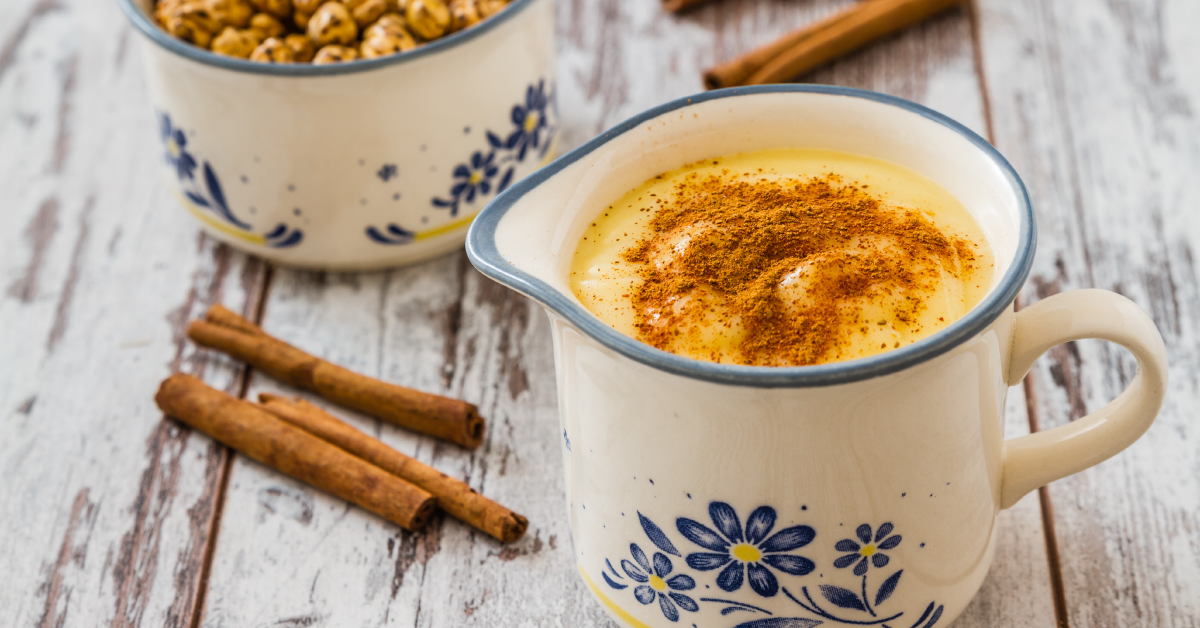
This strange, yellow, sweet-sour drink that is generally served with roasted chickpea and cinnamon is a very healthy fermented drink option.
Nutritional Information
Boza contains probiotic bacteria which are very helpful for the intestinal flora and digestive system. It is also a suitable option in gluten-free, vegetarian and vegan diets. But you need to note that its energy comes from high levels of carbohydrates.
It is a good energy source if you keep the balance between fat and carbohydrate amounts in your diet. But, if you are a person who wants to keep carbohydrates at a low level in your diet, boza may not be a good option for regular consumption. A glass of boza contains about 170 cal in that 20% of this energy comes from carbohydrates, mostly sugar. For more information about microbiological properties or nutrition values, you can read this paper: https://www.researchgate.net/profile/Gulsen-Bayat/publication/338165038_The_Special_Fermented_Turkish_Drink_Boza/links/5efd942aa6fdcc4ca4449ec4/The-Special-Fermented-Turkish-Drink-Boza.pdf

Nutrition value was just a very little reminder but don’t let this deter you form enjoying a glass during the winter months. If you are in Istanbul on a winter night, hearing the cry of a man to sell boza, you probably will not think about your diet, the energy you will take, or your sugar consumption on that day.
Local Vendors
If you are visiting Istanbul, you very likely may be able to open your window, call out to the seller and order your boza. Or maybe you can visit one of the oldest boza shop in Istanbul and drink your boza there.
The oldest boza shop in Istanbul today, Vefa Boza Shop, was established 150 years ago. They still produce, sell, and serve boza with a pinch of cinnamon. When you enter the street in which the shop is, you see the people who shuttle back and forth between the boza shop and dried nut shop that is as old as the boza shop. Be sure to add a handful of hot and crispy roasted chickpea on your cold boza, feeling the aroma of cinnamon, will warm up your inside even before you drink.

Vefa Boza Shop, Istanbul (http://www.vefa.com.tr/index.php?dil=en&sayfa=anasayfa).