
To speak with a licensed agent

(248) 761-2667

6960 Orchard Lake Rd, Suite 200

West Bloomfield MI, 48322

a

MENU

a

Request Your Medicare Quote

Contact Us For a Complimentary Consultation

M

EXIT

M

About Alan Trotsky

Medicare

Financial Services

Events & Seminars

Contact Alan Trotsky

(248) 761-2667

Educational Insights

Being Prepared Is Staying Informed

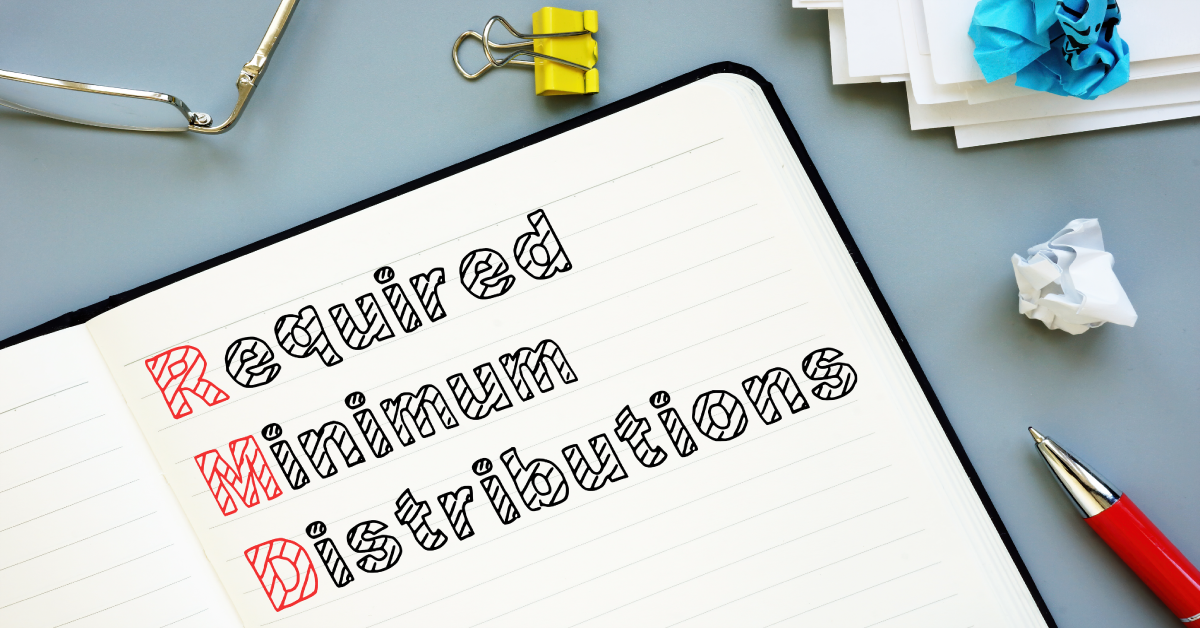
Navigating Your Required Minimum Distribution

Aug 5, 2021 | Blog Posts

Understand the IRS’s calculations and tables.

As much as you would like to, you can’t keep your money in your retirement account forever.

These investment vehicles include 401(k)s, IRAs, and similar retirement accounts.1 Under the SECURE Act, once you reach age 72, you must begin taking required minimum distributions from your 401(k), IRAs, or other defined contribution plans in most circumstances. Withdrawals from your 401(k) or other defined contribution plans are taxed as ordinary income and, if taken before age 59½, may be subject to a 10% federal income tax penalty.

Another major change that occurred from the SECURE Act is the removal of the age limit for traditional IRA contributions. Before the SECURE Act, you had to stop making contributions at age 70½. Now, you can continue to make contributions as long as you meet the earned-income requirement.2

How do you determine how much your RMD needs to be? It depends on whether or not you’re married, and if you are, if your spouse is the sole beneficiary of your IRA and less than 10 years younger than you are. For everyone else, the Uniform Lifetime Table can help.

Keep in mind that this article is for informational purposes only, and the table below is meant to provide some guidance. The table is neither a recommendation nor a replacement for real-life advice. Always contact your tax, legal, or financial professional before making any changes to your required minimum distributions.

Uniform Lifetime Table (additional ages can be found on IRS.gov) 

Age Distribution  Period  Age Distribution  Period  Age Distribution  Period  Age Distribution  Period 
72 years old  25.6  80 years old  18.7  88 years old  12.7  96 years old  8.1 
73 years old  24.7  81 years old  17.9  89 years old  12.0  97 years old  7.6 
74 years old  23.8  82 years old  17.1  90 years old  11.4  98 years old  7.1 
75 years old  22.9  83 years old  16.3  91 years old  10.8  99 years old  6.7 
76 years old  22.0  84 years old  15.5  92 years old  10.2  100 years old  6.3 
77 years old  21.2  85 years old  14.8  93 years old  9.6     
78 years old  20.3  86 years old  14.1  94 years old  9.1     

You can use the following formula to calculate a rough estimate of your RMD:

  1. Determine the year-end balance of your account.
  2. Find your age on the table and note the distribution period number.
  3. Divide the total balance of your account by the distribution period. For example, say you’re 72, and your account balance is $100,000. Your RMD may be about $3,906, based on the table.

Calculating your RMD isn’t tricky, but understanding your RMD’s role in your overall retirement strategy can be complicated. It’s important to note that penalties can apply if you don’t follow the mandatory distribution guidelines. A financial professional is an excellent resource for guidance.

Citations

  1. IRS.gov, September 23, 2020
  2. NerdWallet.com, November 26, 2020
  3. Internal Revenue Service IRA Required Minimum Distribution Worksheet, 2020

0 0 votes
Article Rating
Explaining the Basis of Inherited Real Estate

Explaining the Basis of Inherited Real Estate

What is cost basis? Stepped-up basis? How does the home sale tax exclusion work? At some point in our lives, we may inherit a home or another form of real property. In such instances, we need to understand some of the jargon involving inherited real estate. What does...

read more
Tax Efficiency in Retirement

Tax Efficiency in Retirement

What role should taxes play in your investment decisions? Will you pay higher taxes in retirement? Do you have a 401(k) or a traditional IRA? If so, you will receive income from both after age 72. However, if you have saved and invested much of your life, you may also...

read more
Insurance Needs for Empty Nesters and Retirees

Insurance Needs for Empty Nesters and Retirees

Thinking about coverage as you enter a new phase. With the children now out of the house, financial priorities become more focused on preparing for retirement. At this stage, you may very likely be at the height of your earning power and fast approaching peak savings...

read more
Little-Known Homeowners Insurance Facts

Little-Known Homeowners Insurance Facts

You may be surprised to learn what is and is not covered. If you have a homeowners insurance policy, you should be aware of what this insurance does and does not cover. These policies have their limitations as well as underrecognized perks. Some policies insure actual...

read more
Making Decisions About Life Insurance

Making Decisions About Life Insurance

Life insurance choices can be confusing. Man is Mortal. That makes life insurance a little unique and interesting, doesn’t it? We purchase things like health insurance, car insurance and home insurance, then hope we never have a need to use them. Life insurance is...

read more
How Medigap Choices Are Changing

How Medigap Choices Are Changing

Plan F is fading away, and Plan G may gain more popularity. Soon, two types of Medigap policies will no longer be sold. Seniors who enroll in Medicare in 2020 or later will be unable to buy Medigap Plan F or Plan C. These are the two Medicare Supplement policies that...

read more
The Pros and Cons of Early Retirement Plan Rollovers

The Pros and Cons of Early Retirement Plan Rollovers

Should you withdraw and reinvest your retirement plan money while you are still on the job? Did you know you might be able to take some or all of the money in your 401(k), 403(b), or 457 plan and roll it over into another type of retirement account? Were you aware...

read more
Keep Your Life Insurance When You Retire

Keep Your Life Insurance When You Retire

Some good reasons to retain it. Do you need a life insurance policy in retirement? One school of thought says no. The kids are grown, and the need to financially insulate the household against the loss of a breadwinner has passed. If you are thinking about dropping...

read more
Managing Drug Costs

Managing Drug Costs

How can households meet the challenge? Are prescription drug costs burdening your finances? Some people find it a challenge to manage the cost of prescription drugs. Americans pay an average of $1,200 per year for medicine. For those facing greater and more dangerous...

read more
0
Would love your thoughts, please comment.x
()
x