

To speak with a licensed agent

(248) 761-2667

6960 Orchard Lake Rd, Suite 200

West Bloomfield MI, 48322

a

MENU

a

Request Your Medicare Quote

Contact Us For a Complimentary Consultation

M

EXIT

M

About Alan Trotsky

Medicare

Financial Services

Events & Seminars

Contact Alan Trotsky

(248) 761-2667

Educational Insights

Being Prepared Is Staying Informed

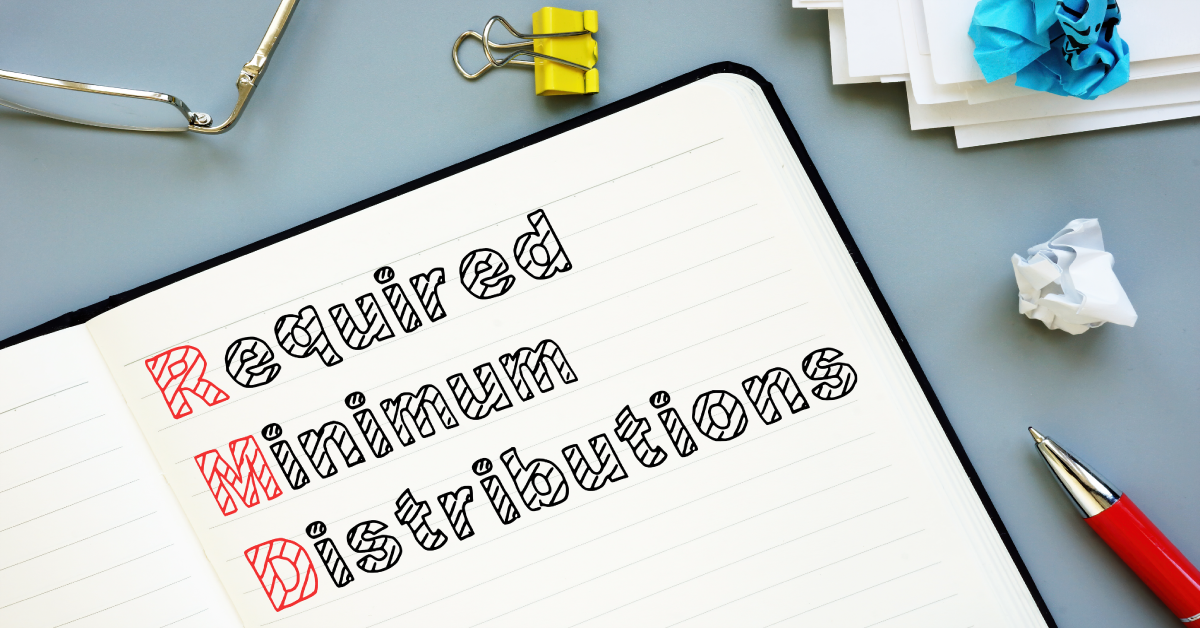
Navigating Your Required Minimum Distribution

Aug 5, 2021 | Blog Posts

Understand the IRS’s calculations and tables.

As much as you would like to, you can’t keep your money in your retirement account forever.

These investment vehicles include 401(k)s, IRAs, and similar retirement accounts.1 Under the SECURE Act, once you reach age 72, you must begin taking required minimum distributions from your 401(k), IRAs, or other defined contribution plans in most circumstances. Withdrawals from your 401(k) or other defined contribution plans are taxed as ordinary income and, if taken before age 59½, may be subject to a 10% federal income tax penalty.

Another major change that occurred from the SECURE Act is the removal of the age limit for traditional IRA contributions. Before the SECURE Act, you had to stop making contributions at age 70½. Now, you can continue to make contributions as long as you meet the earned-income requirement.2

How do you determine how much your RMD needs to be? It depends on whether or not you’re married, and if you are, if your spouse is the sole beneficiary of your IRA and less than 10 years younger than you are. For everyone else, the Uniform Lifetime Table can help.

Keep in mind that this article is for informational purposes only, and the table below is meant to provide some guidance. The table is neither a recommendation nor a replacement for real-life advice. Always contact your tax, legal, or financial professional before making any changes to your required minimum distributions.

Uniform Lifetime Table (additional ages can be found on IRS.gov) 

Age Distribution  Period  Age Distribution  Period  Age Distribution  Period  Age Distribution  Period 
72 years old  25.6  80 years old  18.7  88 years old  12.7  96 years old  8.1 
73 years old  24.7  81 years old  17.9  89 years old  12.0  97 years old  7.6 
74 years old  23.8  82 years old  17.1  90 years old  11.4  98 years old  7.1 
75 years old  22.9  83 years old  16.3  91 years old  10.8  99 years old  6.7 
76 years old  22.0  84 years old  15.5  92 years old  10.2  100 years old  6.3 
77 years old  21.2  85 years old  14.8  93 years old  9.6     
78 years old  20.3  86 years old  14.1  94 years old  9.1     

You can use the following formula to calculate a rough estimate of your RMD:

  1. Determine the year-end balance of your account.
  2. Find your age on the table and note the distribution period number.
  3. Divide the total balance of your account by the distribution period. For example, say you’re 72, and your account balance is $100,000. Your RMD may be about $3,906, based on the table.

Calculating your RMD isn’t tricky, but understanding your RMD’s role in your overall retirement strategy can be complicated. It’s important to note that penalties can apply if you don’t follow the mandatory distribution guidelines. A financial professional is an excellent resource for guidance.

Citations

  1. IRS.gov, September 23, 2020
  2. NerdWallet.com, November 26, 2020
  3. Internal Revenue Service IRA Required Minimum Distribution Worksheet, 2020

0 0 votes
Article Rating
Roths and Tax-Free Buckets

Roths and Tax-Free Buckets

Opening a Roth account is a smart way to save for retirement because you can invest after-tax dollars today and avoid paying additional income taxes in the future - as long as the account meets certain requirements. A Roth option is an investment choice available to...

read more
5 Tips to Increase Your Social Security Benefits

5 Tips to Increase Your Social Security Benefits

If you’re trying to build your retirement paycheck, then learning how to maximize your social security benefits is a great start. Unfortunately, many people don’t even understand how social security really works. Some claim too early, others miss out on major benefits...

read more
Does Your Portfolio Fit Your Retirement Lifestyle?

Does Your Portfolio Fit Your Retirement Lifestyle?

If retirement is on the horizon, you might be wondering if you will be able to maintain your lifestyle after retirement. For most people, a retirement portfolio is based on their investment objectives, risk tolerance, and timelines. The above three factors play a...

read more
9 Most Common Retirement Traps to Avoid

9 Most Common Retirement Traps to Avoid

While most working people hope to achieve retirement, planning for the same is not easy. A lot of variables like the future cost of living, the housing market, life expectancy, etc., need to be accounted for. Knowing just how much you will need for you to live...

read more
Best Life Insurance Companies for Diabetics

Best Life Insurance Companies for Diabetics

It’s a common belief is that obtaining life insurance when diabetic is not possible and that people with this disease cannot insure themselves. However, with a growing number of people suffering from this disease, life insurance companies have developed products...

read more
Important Things to Know About Your Medicare Coverage

Important Things to Know About Your Medicare Coverage

Rising health care costs have made health insurance a much-needed product offering to mitigate the financial blow that could derail your finances. However, it’s important to know that over the years the health insurance space has moved away from simple, on size fits...

read more
How Will Working Affect Social Security Benefits?

How Will Working Affect Social Security Benefits?

You don't have to leave your job when you start receiving retirement benefits. But continuing to earn income from work could reduce the amount of your benefits if you apply for Social Security before you reach full retirement age, the age at which you qualify to...

read more
Will You Avoid These Estate Planning Mistakes?

Will You Avoid These Estate Planning Mistakes?

Too many wealthy households commit these common blunders. Many people plan their estates diligently, with input from legal, tax, and financial professionals. Others plan earnestly but make mistakes that can potentially affect both the transfer and destiny of family...

read more
0
Would love your thoughts, please comment.x
()
x