
A thriving kitchen garden is something any homeowner can be proud of. A space to grow your own vegetables. Whether in raised beds, pots, from seed, or not, there is nothing better than using the freshest cooking ingredients in your meals, straight from your backyard.
Kitchen garden produce is not only tastier and healthier but, when your vegetable plot is well-maintained and truly thriving, it could cut down on your grocery bills.
There are many ways to grow your own herbs and vegetables. You could mix them in among the flower beds, plant them in cute containers, grow them in a dedicated vegetable garden, or on a smaller scale in patio pots or containers.
As much as the idea of having a garden can be exciting, figuring out how to go about it or where to start can be a daunting task for the novice. Luckily for you, in this article, we will discuss the tips and steps on how to start your own simple kitchen garden.
Let’s get started, shall we?
Choose the Right Location
Like all plants, vegetable need sufficient sunlight. A location in the south/southwest of your home will promote good yield.
Generally, choose a location that receives at least 6 hours of direct sunlight per day… 8 hours is even better. Whenever possible, choose a fairly flat surface for your garden, as a sloping garden is more difficult to maintain, takes longer, and even costs more.
The size of the plot is something else to consider. When you start, it is better to concentrate on a small plot, then enlarge it as you go. 10m x 2 to 30m x 2 may be sufficient for a start. For a family of four, you can set a long-term goal of reaching 100m x 2.
Plan your Garden
Before sowing or planting, it is good to loosen the soil in a new garden to allow the roots to grow more easily and access the water and nutrients they need.
Ploughing with a mechanical instrument such as a tiller or using an agricultural tool are the two options. When you have to mix large volumes of soil amendments, the first approach is ideal. When preparing a small garden, ploughing with a spade or fork is more convenient.
In any case, work the soil only when it is slightly wet, but not soggy. Working the soil when it is too dry is difficult while turning it over when it is too wet can compact it. Gently turn the upper 15 to 20 cm of the soil with a spade or fork, mixing the organic matter at the same time.
Generally, most vegetables will appreciate a well-nourished land. Spread organic matter (compost, manure, etc.) before planting on previously dug-out soil. You can repeat this operation at the very beginning of spring or in autumn.
Choose Your Plants
At this point, decide what you want to grow. Some people spend months reading catalogs, while others simply go to the garden center and buy what they like. You can even use the internet to search for plants to buy. All three approaches work if you choose plants that are suitable for your climate, soil, and available sunshine.
Tomatoes are ideal for a first vegetable garden. Plant the young plants in mid-May, one foot every 50 cm. Water regularly at the base without touching the foliage. In times of drought, water every two days.
Sow carrots every two weeks from April to June, covering with little soil. After 4 months punctuated with regular watering, you will harvest them between July and November. Same pattern for green beans that are sown between mid-April and mid-July and harvested in summer.
You can also opt for lettuce, which you will sow between March and June. Sow gradually to harvest in stages from May to October. Zucchinis are particularly generous. After sowing or transplanting them between April and June, you will benefit from abundant harvests during the summer. However, they must be watered copiously and regularly
Start planting
Do not underestimate the influence of the weather on your plants. Some plants like cabbages can withstand the cold and you can then plant them quite early in spring. In contrast, tomatoes, cucumbers, and other fruit vegetables, as well as most annual flowers need warm weather. So, wait until the cold season has elapsed. As for perennials, they are well resistant to cold. You can plant them at almost any time during the gardening season, from mid-spring to mid-autumn.
You can also save money by sowing many vegetables and some annuals directly in the garden. Just follow the instructions on seed sachets on when to sow them, as well as on the depth and spacing of the seeds.
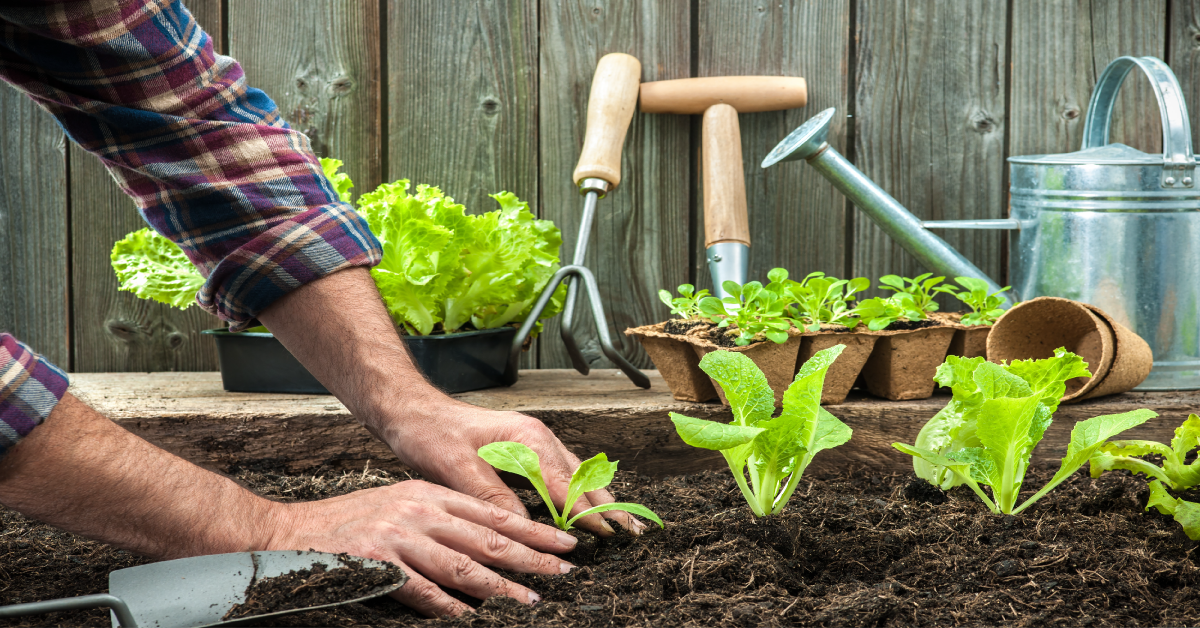
Buying seedlings ready to transplant is a more convenient approach to starting your first garden. Dig holes in your garden according to the recommended spacing indicated on the label.
To remove the seedlings from the container, turn it upside down while holding their stem with one hand, push on the bottom of the pot to clear the root ball. If the roots have become a tangled mass, use a fork, wand, or fingers to untangle some of the outer roots before placing them in the planting hole. Sprinkle the roots with mycorrhizae (beneficial fungi) to ensure better rooting. Then fill with soil and thump lightly around the roots. Finish with deep watering.
Bottom Line
A garden doesn’t have to be a huge commitment, but with the right tools, a little time, and easy-to-follow instructions, you’ll be on your way to developing your own source of nutrition and happiness.
Teach your family members to water the garden and pull weeds to keep your plants healthy. If you are having trouble with your garden, don’t get frustrated. While it might sound fun on paper, gardening involves trials and error, and you will learn as you go.
If you have questions about insect pests, diseases, or plant nutrition, you can contact your local Cooperative Extension Agent for some help.