

To speak with a licensed agent

(248) 761-2667

6960 Orchard Lake Rd, Suite 200

West Bloomfield MI, 48322

a

MENU

a

Request Your Medicare Quote

Contact Us For a Complimentary Consultation

M

EXIT

M

About Alan Trotsky

Medicare

Financial Services

Events & Seminars

Contact Alan Trotsky

(248) 761-2667

Educational Insights

Being Prepared Is Staying Informed

Should You Care What the Financial Markets Do Each Day?

Aug 21, 2021 | Blog Posts

Focusing on Your Strategy During Turbulent Times.

Investors are people, and people are often impatient. No one likes to wait in line or wait longer than they have to for something, especially today when so much is just a click or two away.

This impatience also manifests itself in the financial markets. When stocks slip, for example, some investors grow uneasy. Their impulse is to sell, get out, and get back in later. If they give in to that impulse, they may effectively pay a price.

Across the 30 years ended December 31, 2018, the Standard & Poor’s 500 posted averaged annual return of 10.0%. During the same period, the average mutual fund stock investor realized a yearly return of just 4.1%. Why the difference? It could partly stem from impatience.1

It’s important to remember that past performance does not guarantee future results. The return and principal value of stock prices will fluctuate over time as market conditions change. And shares, when sold, may be worth more or less than their original cost.

Investors can worry too much. In the long run, an investor who glances at a portfolio once per quarter may end up making more progress toward his or her goals than one who anxiously pores over financial websites each day.

Too many investors make quick, emotional moves when the market dips. Logic may go out the window when this happens, in addition to perspective.

Some long-term investors keep focus. Warren Buffett does. He has famously said that an investor should, “buy into a company because you want to own it, not because you want the stock to go up.2

Buffett often tries to invest in companies whose shares may perform well in both up and down markets. He also has famously stated, “If you aren’t willing to own a stock for ten years, don’t even think about owning it for ten minutes.”2

In contrast with Buffett’s patient long-term approach, investors who care too much about day-to-day market behavior may practice market timing, which is as much hope as strategy.

To make market timing work, an investor has to be right twice. The goal is to sell high, take profits, and buy back in just as the market begins to rally off a bottom. But there is volatility in financial markets and the sale at any point could result in a gain or loss.

Even Wall Street professionals have a hard time predicting market tops and bottoms. Retail investors are notorious for buying high and selling low.

Investors who alter their strategy in response to the headlines may end up changing it again after further headlines. While they may expect to be on top of things by doing this, their returns may suffer from their emotional and impatient responses.

Nobel Laureate economist Gene Fama once commented: “Your money is like soap. The more you handle it, the less you’ll have.” Wisdom that may benefit your strategy, especially during periods of market volatility.3

Citations.

1 – nytimes.com/2019/07/26/your-money/stock-bond-investing.html [7/26/19]

2 – fool.com/investing/best-warren-buffett-quotes.aspx [8/30/19]

3 – suredividend.com/best-investment-quotes/ [12/5/18]
Investing During Periods of Inflation

Investing During Periods of Inflation

What to Consider The Covid-19 pandemic has led to a radical shift in the way the Fed handles inflation and the economy in general. For instance, in August 2020, the Federal Reserve announced that it was willing to let the inflation rate go higher than normal to offer...

read more
Managing Money as a Couple

Managing Money as a Couple

What are the keys to prepare to grow wealthy together? When you marry or simply share a household with someone, your financial life changes—and your approach to managing your money may change as well. The good news is that it is usually not so difficult. At some...

read more
2021 Limits for IRAs, 401(k)s and More

2021 Limits for IRAs, 401(k)s and More

Numbers to know for the new year. On October 26, the Treasury Department released the 2021 adjusted figures for retirement account savings. Although these adjustments won’t bring any major changes, there are some minor elements to note. 401(k)s. The salary deferral...

read more
That First Distribution from Your IRA

That First Distribution from Your IRA

What you need to know. When you are in your seventies, Internal Revenue Service rules say that you must start making withdrawals from your traditional IRA(s). In I.R.S. terminology, these withdrawals are called Required Minimum Distributions (RMDs).1 Generally, these...

read more
How to Get Medicare Prescription Drug Coverage

How to Get Medicare Prescription Drug Coverage

Prescription drug coverage is an important part of any comprehensive health insurance plan. However, as drug prices increase, many health insurance companies are putting more restrictions on the items they will and will not cover. This means even if you enrolled in a...

read more
A Roth IRA’s Many Benefits

A Roth IRA’s Many Benefits

Why do so many people choose them over traditional IRAs? The IRA that changed the whole retirement savings perspective. Since the Roth IRA was introduced in 1998, its popularity has soared. It has become a fixture in many retirement planning strategies because it...

read more
Life Insurance with Extended-Care Riders

Life Insurance with Extended-Care Riders

The last year has seen a lot of changes in the insurance industry, courtesy of the COVID-19 pandemic. More specifically, the extended-care policies have been affected with most people now finding it difficult to qualify. The most affected group is the high-risk...

read more
Do Our Biases Affect Our Financial Choices?

Do Our Biases Affect Our Financial Choices?

Even the most seasoned investors are prone to their influence. Investors are routinely warned about allowing their emotions to influence their decisions. However, they are less routinely cautioned about their preconceptions and biases that may color their financial...

read more
Building a Healthy Financial Foundation

Building a Healthy Financial Foundation

When you read about money matters, you will sometimes see the phrase, “getting your financial house in order.” What exactly does that mean? When your financial “house is in order,” it means it is built on a solid foundation. It means that you have six fundamental...

read more
Pullbacks, Corrections, and Bear Markets

Pullbacks, Corrections, and Bear Markets

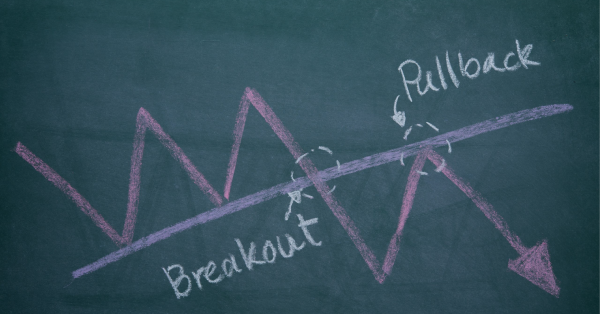
The COVID-19 outbreak has put tremendous pressure on stock prices, prompting some investors to blindly and indiscriminately sell positions at a time when the entire market is trending lower. Worried investors believe "this time it's different." When the market drops,...

read more